
I recently asked Tim if he had a favorite, funniest or strangest job he’d ever worked on. I was hoping to hear about a Jumanji board, treasure chest with stolen property of a valuable nature, or a message in a bottle.
The conversation ended up being about a rainbow.
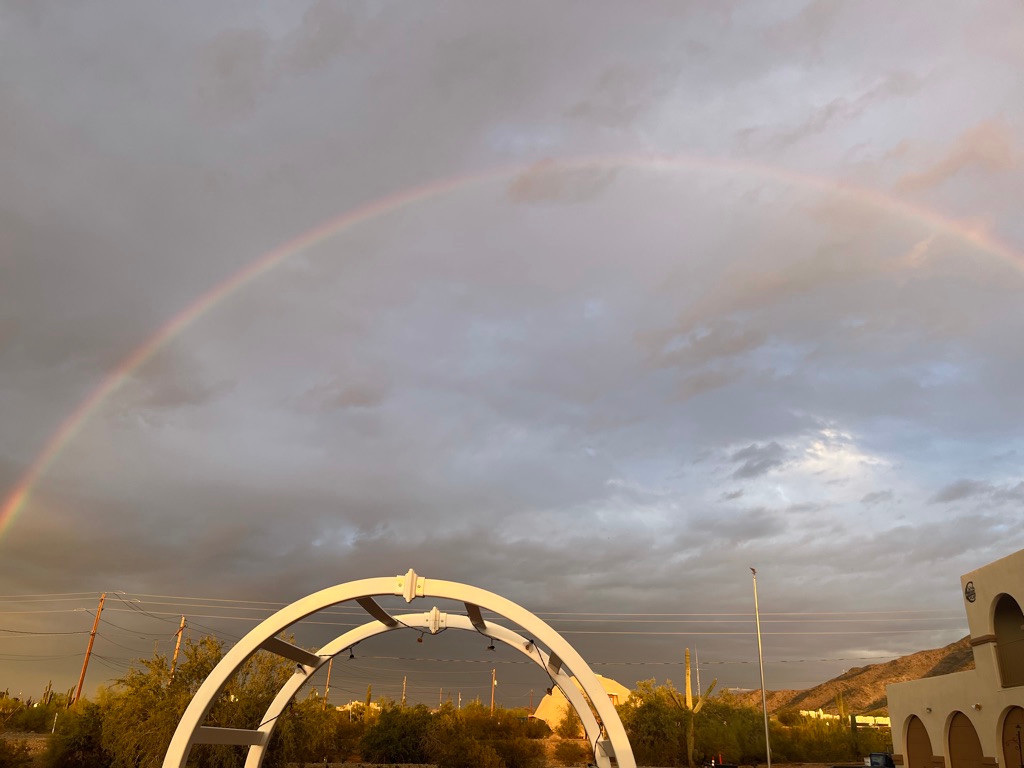
In this case, a rainbow is what you see when a communications cable gets hit, and all the different-colored fibers or wires inside are exposed. It’s considerably less pleasant than it sounds.
Then told me about a job where the main digging was done, then someone asked for a little extra work.
The question came up: had the alley been included in the original Blue Stake?
It hadn’t.
A really smart guy who was working the job warned the customer that digging there wasn’t a good idea. But after a phone call, a go-ahead, and some digging… a rainbow. Fiber-optic cables.
If there had been a pot of gold at the end of that particular rainbow, they probably would’ve needed it for repairs.
That story led to a much longer conversation about underground utilities, why locating takes time, and how much there can be to work out before a digging job starts. These are some of the details behind the work we do at Clendaniel Contracting that don’t always come up when someone first describes a project.
What Tim is looking for
When Tim looks at a property, he’s looking for utility pedestals, gas service, power and other clues about what might be underground. Where do services enter the building? What infrastructure is nearby? What could run through the area where the work needs to happen?
Looking at the property helps him understand the site and ask questions. Getting the underground facilities located is another part of the process.
The alley story gets at something that matters: the actual area where the work is happening. The original digging had been done, but the extra request involved another area that hadn’t been included in the locating request.
It’s easy to see how that could happen. The equipment is already there, the main work is nearly done, and someone asks for one more thing. But adding another area can mean there’s more to establish before digging there.
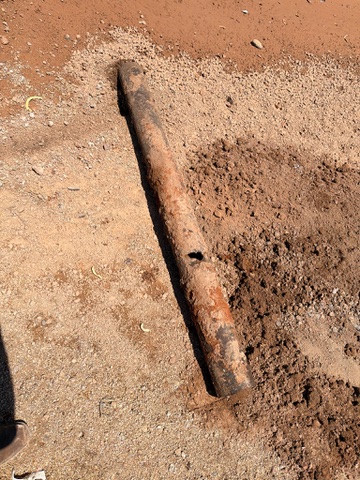
Yes, we still call it Blue Stake
Most folks around here, including Tim, call it Blue Stake, but now it’s called Arizona 811, or 811 for short.
I knew the phrase “call before you dig,” but our conversation got into what happens after that call.
Arizona 811 takes the information about the proposed digging area and notifies the affected utility operators. Those operators respond about each of their own facilities. Depending on the site, that can involve city water, electric and gas companies, communications providers and sometimes even irrigation infrastructure for SRP. There’s a lot more. Tim started listing examples we’ve come across: SRP, Southwest Gas, Cox, city water, CenturyLink, street lights and traffic signals, sewer, storm sewer, high pressure gas, high pressure air products… It can be a much longer list than someone might expect. Those are all from just one or two recent jobs.
That means several separate responses need to come together for the same job, and just one or two companies showing up doesn’t mean you’re all clear. Every utility operator listed on the ticket needs to mark its facilities or confirm there’s no conflict before excavation starts. Sometimes they simply respond with “no conflict,” knowing they have nothing in the area.
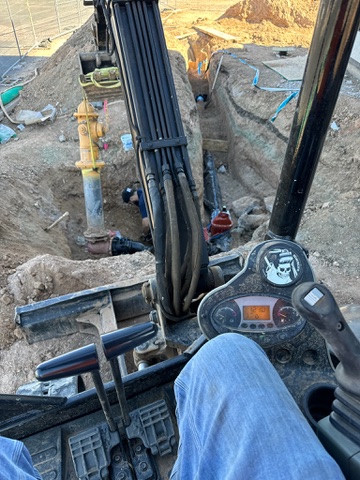
The waiting is part of the job
Once Tim explained that the locating service through 811 is free, I asked why people sometimes skip it. His answer was mostly about time.
He talked about delays and requests for more time from individual companies. A delay response on its own isn’t permission to dig. There can be several parties involved, each responding separately, while everyone connected to the job wants to get moving.
Tim has opinions about that. The version here is G-rated, but the original explanation was significantly more… colorful.
It also helped me understand why locating needs to be accounted for when we plan a job. It’s easy to describe a project in terms of what needs to be removed, repaired or installed. There are also questions about what’s already there and how the work can proceed around it.
A damaged line can bring repairs and service interruptions into a job that was supposed to be much simpler. The utility operator must be notified immediately if a line is damaged. If the damage releases hazardous gas or liquid, 911 or the local emergency response agency must be notified immediately, too.
Private property and private lines are different things
I also asked Tim about work on private property, including backyards and commercial properties. This part of the conversation needed a little untangling, because “private property” and “privately owned utilities” aren’t interchangeable.
Utility-owned lines can run through easements on private land. Utility operators locate facilities they own, operate or maintain, including those on private property. Other lines may belong to the property owner and need separate locating, which may involve hiring a private locator.
But an extremely common problem is landscape irrigation at a commercial property. Those sprinkler lines are different from a utility-owned irrigation line that might also run through an area. The water may be underground in both cases, but ownership matters to how the lines are located and accounted for.
That distinction is part of understanding what a job involves. It’s also why seeing utility marks doesn’t necessarily answer every question about what’s beneath a property.
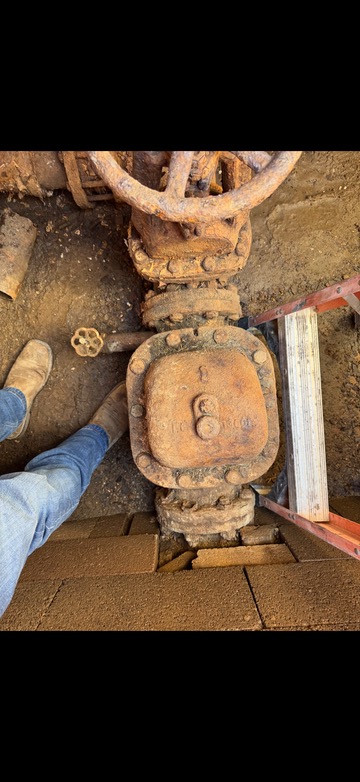
Sometimes the digging starts with an unexpected repair
There was another job in our conversation involving a truck with a large trailer that hit a post indicator valve. If you didn’t know (I didn’t), it’s part of a fire-protection system. The repair required replacing the valve and other components underground.
It’s just another example of how a visible problem can lead to work below the surface. Something gets damaged above ground, and the repair involves more than the parts we can see.
Whether a project is planned ahead or comes out of an unexpected problem, understanding the underground conditions is part of figuring out the work. That’s what I wanted to get into by asking Tim these questions: what we’re looking at, what has to be coordinated, and why some details deserve attention before the equipment starts digging. No matter how long we’ve been married or how many jobs our company does, it seems I always have something new to learn.
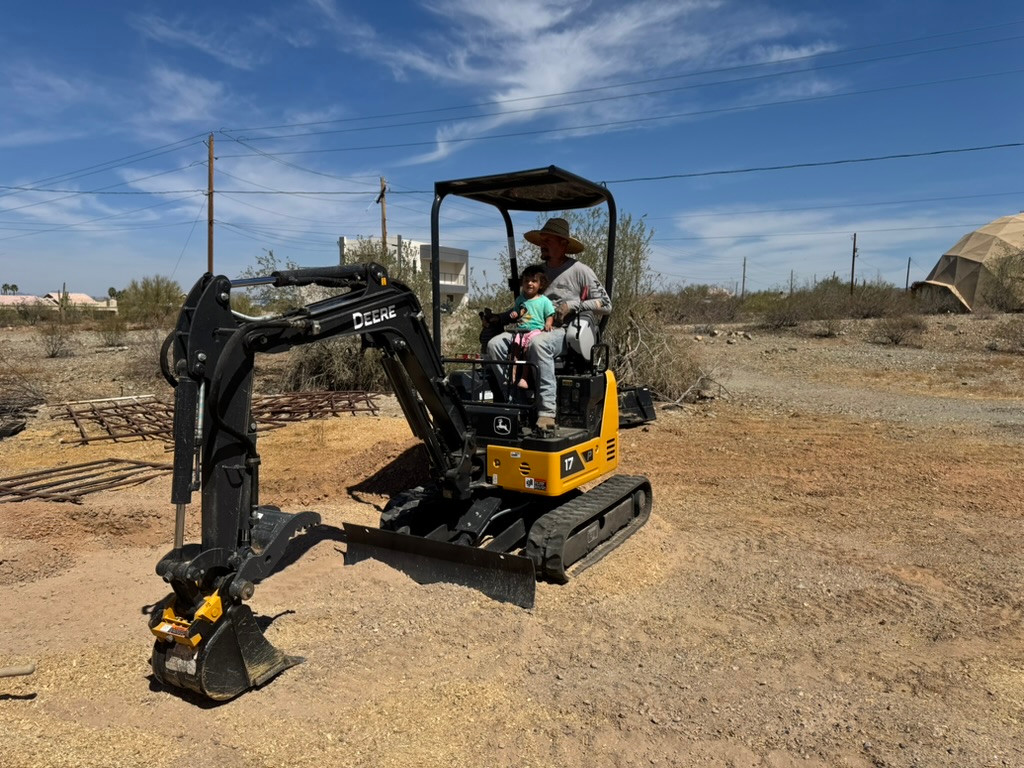
So that’s how a question about unusual things Tim had dug up became a conversation about utility companies, irrigation lines, locating requests and an alley. Oh, and a rainbow.
And as for exactly who dug up that rainbow, I’ll leave it to you, the reader, to figure that part out.